Introdction
If you are a wholesale buyer for a B2B firm or the owner of a retail brand, you have certainly felt the anguish of a sophisticated bespoke jewelry sketch losing subtle nuances in the normal manufacturing process. I’m sure you’ve got personal experience with this yourself. If you’re launching a high luxury line, any weirdness that happens when you’re placing huge orders could be catastrophic to your company’s reputation. This particular difficulty is being solved by the creation of RPT jewelry and driving the revolution in the sector. They go through the whole process every time and make sure their patterns are perfect and perfectly reproduced in 925 silver. This book will provide you a complete knowledge of the working of Rapid Prototyping Technology (RPT). And you will also know the need of working with a manufacturer with RPT to develop your unique silver collections accurately and fast.
What is RPT Jewellery Manufacturing?
“RPT replaces manual wax carving with advanced 3D printing, enabling exact digital replicas of your most complex jewellery designs.”
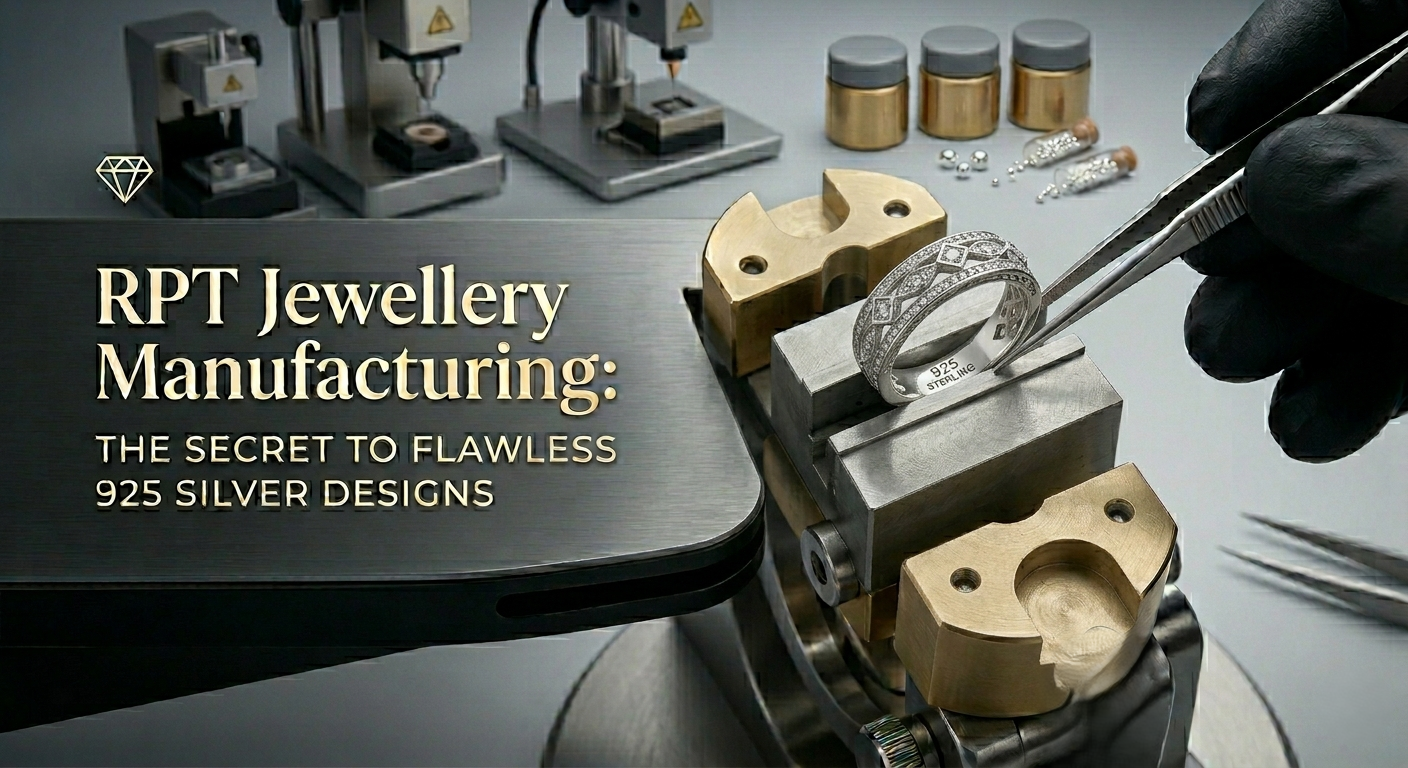
Rapid Prototyping Technology (RPT) is a computer controlled additive manufacturing technology, best known as 3D printing, which builds extremely accurate physical models from digital blueprints in a very short time. This is done via RPT. The jewellery business has in the past depended on the very talented craftsman who cut wax models. This has been the case in the entire sector. The process in questions is not only amazing, but also consumes a lot of time and is subject to mistakes due to the existence of pros.
Today in the corporate world designers employ computer aided design (CAD) software to digitally create a product. Once the design is accepted, the RPT system is a high resolution 3D printer that builds the real prototype, layer-by-layer, from a specialty castable resin or wax. This pure master sample is the bridge between digital technological purity and real world reality.
From Digital Concept to Wholesale Delivery in RPT Jewellery
“The RPT process seamlessly integrates advanced digital technology with the time-honored tradition of lost-wax casting to deliver premium 925 silver jewellery.”
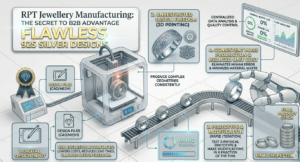
If you want to be able to consistently communicate quality to your end customers, you must have a complete understanding of the production process your products go through. The AGOR RPT manufacturing process is consists of four primary steps, which are detailed below :
- Step 1: CAD & Digital Prototyping: The first stage in the digital prototype and computer-aided design (CAD) process is to take your idea drawing and make it a three-dimensional computer-aided design (CAD) model. This offers us a full and complete perspective of the idea before we start any kind of actual production. This helps us to know the weight of the metal and to improve our design.
- Step 2: 3D Printing the RPT: The RPT is then printed using a 3D printer. To do this, send the appropriate CAD file to a 3D Rapid Prototyping system. With modern technologies such as Direct Light Projection (DLP) and Stereolithography (SLA) it is possible to print a resin model that is 100% accurate and functioning during the print process.
- Step 3: Creating the Master Mould:The next step is the creation of the Master Mould, which entails the casting of the 3D printed prototype in a silver master model. This is achieved by transforming the prototype to a master model. This master is utilized by us to produce a vulcanized rubber mold, the target result. These rubber molds are key to achieving economies of scale because they guarantee that each and every item , whether fifty or five thousand duplicates , is a carbon copy of the original design . No matter what the amount of copies you order, this is true.
- Step 4: Lost-Wax Casting & Finishing: In the technique, the molten wax is pushed into the rubber mold to create the wax designs. At the end of the process the wax patterns are attached to a ” wax tree “. Lost wax casting is a process where the wax is melted off and replaced with fine molten 925 sterling silver. This process is called lost wax casting. But it’s our master craftsmen that grind, file, set the gemstones exactly and polish to a high gloss to give the luxurious finish that AGOR is known for, when you get down to it.
Business Advantages for B2B Buyers in RPT Jewellery
“Switching to an RPT-equipped supplier lowers your costs, drastically reduces lead times, and unlocks unlimited design freedom for your brand.”
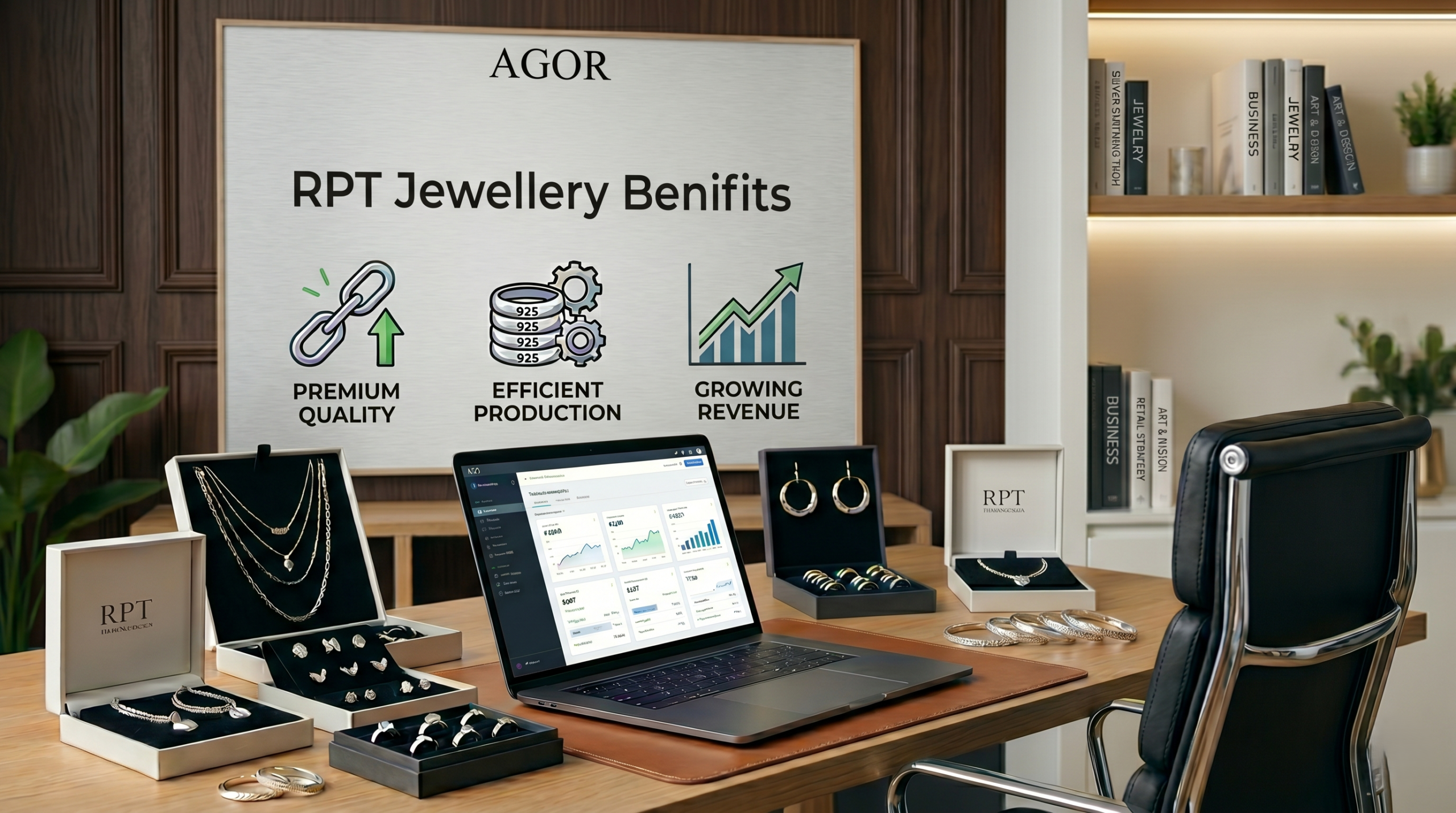
If you’re in the midst of purchasing 925 silver jewelry for your retail brand, here are three of the most important ways in which RPT technology directly affects your bottom line :
- Unrestricted Design Freedom: RPT provides complete freedom of design to produce delicate and difficult filigree, intricate hollowed-out structures and accurate geometric designs, which would be extremely difficult to make consistently by hand. RPT can do everything you want to think of.
- Unmatched Speed to Market: In the fast-paced world of fashion, time is of the essence. Speed to Market needs a high rate of speed. The RPT allows for quick iterations which greatly cuts down production time. They can test a physical prototype , make modifications , and go into mass production in a fraction of the time it takes traditional silversmiths .
- Cost-Efficiency & Consistency: RPT is a very cost-effective technology, in terms of cost and consistency. It reduces the material waste and errors made during human drafting, and copies the master design without any faults for large orders. It also reduces the number of errors made by humans when writing. You get great, ethically sound craftsmanship in 925 silver without the costs of traditional manual prototyping.
Are you ready to see your stunningly unique 925 silver masterpieces come to life with the precision of RPT manufacturing? Get in touch with AGOR’s dedicated production specialists as soon as you can to start working on your next collection.